by Jocelyn Watkin | Sep 19, 2026 | Information |

Young people partying
“Youth is wasted on the young.” So goes the famous quote usually attributed to poet George Bernard Shaw.
Older adults might possess the knowledge on how to enjoy life, but often their bodies no longer have the boundless health of youth to fully take advantage of this know-how.
There seems to be a growing fascination with longevity and how to achieve it – not simply wanting to live a long and healthy life, but trying to optimise ourselves so we can squeeze every possible year out of our bodies. How much effort should we put into living longer and will this effort pay off?
A recent RNZ article looked at some of the things New Zealanders are doing in the hope of living longer. Some of it makes perfect sense: getting enough sleep, eating well and taking care of our health. But there is a fine line between looking after ourselves and becoming so obsessed with optimisation that it starts to create stress of its own. https://www.rnz.co.nz/life/wellbeing/what-new-zealanders-are-doing-to-try-and-live-forever-or-at-least-longer
That has even spawned the rather amusing term “maxxing” – taking something we want to improve and trying to maximise it. Sleep-maxxing, for example, can turn the perfectly sensible advice to get enough sleep into an elaborate project involving tracking, monitoring and worrying about whether we’re sleeping well enough. Read more about the stress of ‘maxxing’: https://www.rnz.co.nz/life/wellbeing/our-obsession-with-maxxing-could-actually-be-stressing-us-out
And there is an obvious irony here: if you’re lying awake worrying about achieving the perfect night’s sleep, you may not be helping yourself much!

Lack of sleep (and anxiety about ‘maxxing’ sleep) can lead to poor health
The Fountain of Youth

The mythical Fountain of Youth
The search for ways to beat ageing is certainly not new.
Quests for eternal life or to discover the “Fountain of Youth” date back over 4,000 years – from ancient India, Persia, Greece, Egypt, Mesopotamia (King Gilgamesh), and China (Emperor Qin Shi Huang), and on through the Middle Ages and Renaissance. The so-called “Elixir of Life” was often toxic, and many died early instead of living longer. Read more…
In more recent times, wealthy Americans have been prepared to spend extraordinary amounts of money on treatments and interventions promising to slow or reverse ageing. Plasma transfusions, supplements, elaborate testing and a bewildering array of “anti-ageing” strategies can sound very impressive.
But impressive isn’t the same as proven. For example: Young-donor plasma is a particularly good example of the hype. The US FDA says it is not aware of evidence demonstrating clinical benefit from young-donor plasma for ageing or age-related conditions, and warns that plasma transfusions carry risks. Read more about this.
That doesn’t mean we should abandon sensible health checks or medical care. Screening such as bowel screening and mammograms are important, as are cardiovascular assessments, particularly when there are recognised risk factors or family history.
If you love your health, get regular health check ups. Prevention beats treatment.
In addition, sleep, good nutrition, social activities, reducing stress, and keeping your brain active are all important.
The question is whether more, more expensive and more complicated necessarily means healthier. Check out this article of a wealthy American spending more than $2 million on a quest to stay young.
Perhaps he and others are asking the wrong question? Maybe the goal shouldn’t simply be “How can I live longer?”
Perhaps a better question is: “How can I stay strong, mobile and independent for as long as possible?”
The World Health Organization (WHO) takes a similar approach to healthy ageing. Rather than defining healthy ageing simply as being free of disease or living to a particular age, WHO focuses on maintaining functional ability – being able to move around, meet our own needs, maintain relationships, learn and make decisions, and participate in life. Read more …
In other words, it’s not just about lifespan – how many years we live – but healthspan: how many of those years we can live with good function and independence.
This is where ordinary physical activity starts to look rather impressive.
The benefits of moving and the downsides of falling

As we get older, maintaining strength, balance and mobility becomes increasingly important.
A serious fall can have consequences far beyond the immediate injury: a fracture or other trauma may mean hospitalisation and surgery, followed by weeks or months of reduced activity. Strength can be lost, confidence can take a knock, and fear of falling can lead people to become less active – which can create another downward spiral.
Anything that helps us maintain balance and physical function is potentially doing much more than simply helping us perform better on an exercise test.
And this is where tai chi enters the picture.

With my active tai chi group at Acacia Retirement Village
A 2023 systematic review and meta-analysis brought together 24 randomised controlled trials investigating tai chi and falls in older adults. The researchers found that tai chi reduced the risk of falls and improved several measures of balance and mobility. Read more…
That doesn’t prove that tai chi makes us live longer. But it does provide evidence for something arguably more useful: helping us retain some of the physical abilities that make later life safer, more independent and more enjoyable.
And it isn’t just about preventing falls. Tai chi involves controlled movement, weight shifting, leg strength, coordination, posture, balance and concentration. Practiced regularly, it is a way of continually asking the body and brain to work together.
Maybe we don’t need to “maxx” everything? There is something rather appealing about not ‘maxxing.’
While some are searching for the ultimate longevity intervention, perhaps the most useful things we can do are remarkably ordinary: move regularly, maintain strength and balance, eat reasonably well, sleep as well as we can, stay connected with other people, manage stress and keep doing things that we enjoy.
That is one of the advantages of tai chi. It isn’t a magic potion for longevity. It doesn’t promise to turn back the clock. But it can help us practice living well in the body we have now – and keep doing so as we get older.
The goal isn’t to defeat ageing. Instead, it is to live stronger for longer.
That sounds like a much more enjoyable prospect to me.

by Jocelyn Watkin | Jul 28, 2026 | Information |

Enjoy short outings with some stair walking
I often tell my tai chi students that the best way to learn new steps or movements is to practice them often and regularly.
This doesn’t mean lengthy and laborious sessions. “Bite-sized” chunks are the way to go. Just five minutes per day is better than one long session once per week.
It’s the same with other exercise. “Snacking” on fitness is better than trying to do a marathon. This is especially relevant in winter, when the cold and wet days can tempt us to hibernate.
‘Exercise snacking’ can help us to more-easily keep fit and healthy over winter.
What does it involve? Just a 30-second and up to 5-minute burst of movement several times per day and prioritising these so that they become part of your daily routine.
For example:
- If you’ve been sitting for 20 – 30 minutes, get up for a stretch, get a drink of water, or walk around your house or workplace for five minutes.
- Instead of taking the nearest parking spot to the front door of a supermarket, library, café, or education class, etc, try parking further away in the car park. This means you will walk a little further each time you visit.
- Walk up one flight of stairs, instead of taking the lift.
- Stand or move around while on a phone call or waiting to brew a cup of tea or coffee.
- Buddy up with a friend or a member of your whānau, to learn new forms of exercise or to take longer walks or cycle rides.
- Find an exercise you actually like doing, which also involves learning new steps, such as dancing or tai chi. Spend five minutes 2 – 3 times per day to practice the movements.
- Focus on moving your body rather than aiming for perfection. Just move!!

Buddy up with friends for short cycle rides or walks
There are many health benefits with ‘exercise snacking’. Check out these articles for more info:
by Jocelyn Watkin | May 6, 2025 | Information

Dreaming of flying towards the sun this winter?
Feeling all shivery in the mornings? What about when curled up under two duvets at night, dreaming of flying north or to the Pacific Islands to follow the sun?
Before you book that one-way ticket, here’s a cosy secret: you can turn up your inner heat right here at home — no passport required.
As the days grow shorter and the chill sets in, many of us start hunting for ways to stay warm without simply cranking up the heater or huddling under several blankets all winter.
Tai chi and qigong might not be the first things that come to mind when you think of keeping warm — but they should be.
So, can tai chi really help quell the quivery shivers of winter?
Yes, absolutely.
Tai chi and qigong are gentle forms of exercise, which means they’ll warm your body just as any physical movement does. But they go far beyond that.
The magic lies in the how. Slow, flowing movements combined with deep, mindful breathing do more than just get your blood moving — they improve your circulation and help your body absorb oxygen more efficiently.
Unlike high-intensity workouts that burn through your oxygen and leave you gasping, tai chi and qigong cultivate a quiet, lasting energy that lingers long after your practice ends.
That’s why so many practitioners describe a subtle, comforting warmth spreading through their bodies — not just during the session, but for hours afterward.
In the world of Traditional Chinese Medicine, this warmth has an even deeper explanation. Tai chi and qigong help to cultivate your qi — your life force, your mauri — which is believed to support your body’s natural defenses and resilience. A strong flow of qi is said to help you withstand not just winter’s chill, but also many seasonal bugs and fatigue.
And it’s not just ancient wisdom saying this. Modern research backs it up, too. Studies show tai chi and qigong can positively influence immune system functioning and reduce inflammation — helping you feel stronger and more energised during the colder months.
Explore the science here: https://www.kiaorataichi.nz/tai-chi-and-qigong-can-boost-immunity/
So next time you reach for another pair of socks or wrap yourself in a blanket, consider this: tai chi and qigong could be your warmest allies this winter.
I welcome new beginners at my tai chi classes in Clendon, Manurewa, on Wednesday evenings, 6.30 – 7.15pm. Your first class is free. Find out more: https://www.kiaorataichi.nz/classes/
The photo above of me practising tai chi in the glow of a huge, close-up photo of the sun was taken at the ‘Astronomy Photographer of the Year’ exhibition, Te Whare Taonga o Waikato Museum & Gallery, in Hamilton. https://tewharetaonga.nz/
by Jocelyn Watkin | Apr 16, 2025 | Information
The Kia Ora Tai Chi seniors group understand about ‘use it or lose it.”
American Fitness guru Elaine LaLanne, who is still going strong at age 99, defies the oft-quoted line that loss of muscle and strength is inevitable as we age.
She says, “If you don’t move, you’ll become immovable”.
Age-related progressive loss of muscle mass and strength definitely exists and is known by the medical term “sarcopenia”. It’s literal meaning is ‘poverty of the flesh’, and it is a major cause of frailty amongst older adults.
It is mainly caused by the natural aging process. However, the good news is that sarcopenia is not inevitable although this will depend on your overall health, physical activity and whether you eat well.
According to University of Otago and Brain Research New Zealand neuroscientist Phil Sheard, even a modest amount of exercise is enough to stave off muscle weakness and frailty in old age. It’s definitely a case of ‘use it, or lose it’.
Can tai chi help? You betcha!
In a 2022 systemic review and meta-analysis of 11 randomised controlled trials (RCTs), the conclusion was that: “Patients with frailty or sarcopenia who practiced tai chi exhibited improved physical performance in the 30-second chair stand test, the timed up and go test, number of falls and fear of falling.” Click here to Read more
While any exercise is better than no exercise, it is noted that participants in these studies did tai chi several times per week. The ‘modest amount’ of exercise suggested by the University of Otago means more than once per week. This can be a mixture of exercises, not just tai chi.
You may not be able to completely prevent sarcopenia since the condition happens as part of the natural aging process. But you can take steps to slow the progression of the disease. These include:
- Making healthy food choices: Choose a healthy diet that includes high-quality proteins.
- Exercise: Maintain a physically active lifestyle that includes regular resistance training and exercises that are weight bearing.
- Routine physicals: Visit your doctor or healthcare professional regularly and let them know about any changes in your health.
All of the Kia Ora Tai Chi instructors are approved as Community Group Strength & Balance Programme exercise providers by ACC, Age Concern and Harbour Sport. This is a key part of ACC’s programme called “Live Stronger, for Longer”, which is to reduce and prevent falls in senior adults.
Find out more:
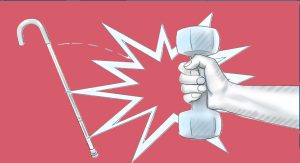
“If you don’t move, you’ll become immovable” (Quote from Elaine LaLanne)
by Jocelyn Watkin | Oct 5, 2024 | Information

Jocelyn crossing the Perry Cycle Bridge on Te Awa, The Great New Zealand River Ride
I love how tai chi is perfect for improving balance. As well as making you fitter and stronger and less likely to have a fall, tai chi is also great for cycle riding.
I organised a successful fundraising event on e-bikes for the Mental Health Foundation of NZ (the foundation) during July 2024’s Mindfulness Month. As well as the participants, many of you also generously donated and, together, we raised over $1,000. Woot!
This meant that, by August 2024, I was awarded the title of ‘fundraising hero” by the foundation and featured on their website: https://mentalhealth.org.nz/fundraising-heroes
A huge thank you to the teams at River Riders NZ and Electrify NZ Botany who sponsored the e-bike ride on Te Awa (the Great New Zealand River Ride) by providing free e-bike hire, helmets and minibus transport to and from Auckland.
Many thanks, too, to everyone who helped with the fundraising, either as a cyclist or the many others who supported the cyclists and also generously donated to the Mental Health Foundation of New Zealand.
You are all the real heroes!
If you want to know more about how tai chi can improve your balance, read this…

The e-bike group that completed the successful fundraising event during Mindfulness Month